
Stamped Concrete Sidewalk Color Issue
In the world of home improvement, giving your sidewalk a makeover can dramatically enhance your property’s curb appeal. Stamped concrete is a popular choice due to its versatility and aesthetic appeal. However, choosing the right color and seal can make or break the look.
Finding a contractor that can help you navigate the nuances of colored concrete is definitely an important part of a project like this.
In this blog post, we’ll explore a real-life example where a homeowner faced challenges with her stamped concrete sidewalk. We’ll discuss the problems she encountered, the steps taken to resolve them, and how you can avoid similar issues in your projects.

Understanding the Stamped Concrete Dilemma
Stamped concrete is designed to mimic the appearance of stone, brick, or other natural materials. Most homeowners that elect for this kind of finish are looking for a more organic look and feel that does not resemble traditional concrete. The process in a nutshell, at least for Denver Concrete Inc projects is to color the concrete (base color) with integral color.
With integral color, the concrete is colored in the mixing truck at the job site or sometimes it is mixed at the plant. This base color is poured and then finished the same as traditional concrete. The next critical step is stamping the surface with a predetermined pattern to give it texture and depth. This step must be executed with precision to ensure that the pattern is uniform across the entire surface.
Case Study: A Stamped Concrete Snafu in Highlands
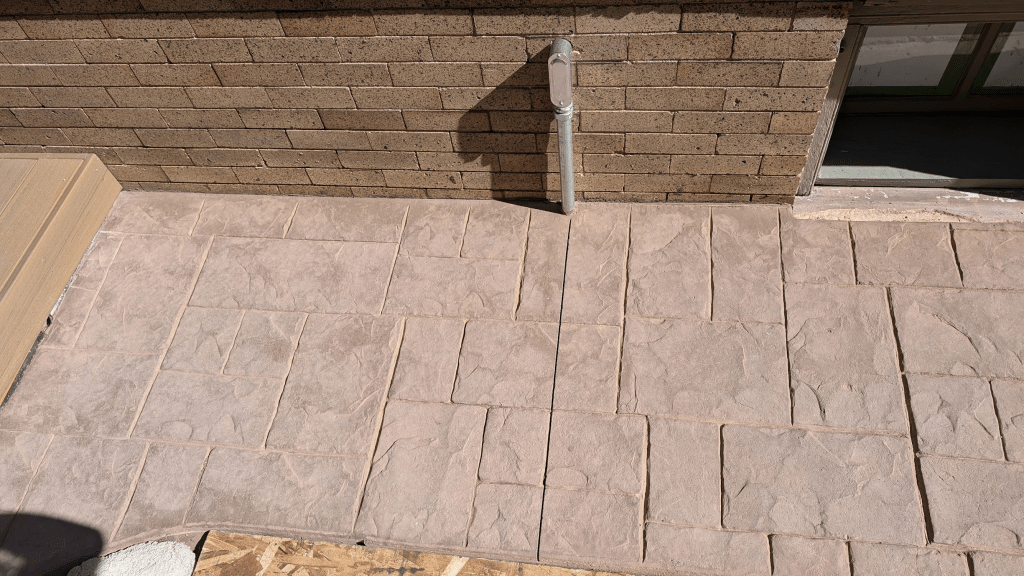
A homeowner in Highlands contacted Denver Concrete Inc. to review a stamped concrete sidewalk she had most recently installed. Initially, she had chosen a different contractor, primarily due to cost considerations. The project involved installing a new sidewalk that extended from the front of her house to the back patio, using a base color “leather” and a terracotta release for contrast. Unfortunately, there was a miscommunication about the desired muted contrast between these colors. Instead of achieving the expected look, the finished product had a peachy, even pink, undertone, which did not meet the homeowner’s expectations.
This unfortunate outcome often results from a miscommunication between homeowners and contractors regarding color expectations. The process of adding color to stamped concrete involves several steps, including selecting the right color, applying it, and sealing it for durability and aesthetics.
The Importance of Communication in Home Projects
A lack of clear communication can lead to dissatisfaction in home improvement projects. In this case, the homeowner had several meetings with both the contractor and the manufacturer. Unfortunately, the final result still didn’t meet her expectations.
Denver Concrete Inc. set an appointment to review the work, acknowledging the homeowner’s dissatisfaction with both the finish and her overall experience with the initial contractor. The review revealed that the sidewalk had not been pressure washed to remove the powdered release, leaving the undesirable tone. The homeowner also consulted with representatives from Brickform and Bobcat of the Rockies, but received limited solutions.

It is important to understand that stamped concrete and evaluating the colors of the project after installation is a big mistake. In order to reveal what the color will look like, adding water to the surface of the sidewalk can assist in showing you how dark the color is going to look once sealed. The contractor did not take the time to understand what the homeowner’s issue was. The representatives really offered no solution that would satisfy the homeowner. It is unfortunate because the contractor did a fantastic job installing the stamped concrete and manufacturer’s colors were really spot on.
After agreeing on a plan to move forward, the homeowner hired Denver Concrete Inc. to apply final color and seal the stamped concrete sidewalk. For the scope of work, Denver Concrete Inc would be pressure washing the sidewalk and reviewing the homeowner before applying antique-it which would color the lows and enhance the pattern (in this case the Ashlar Slate pattern). After the sidewalk has been colored, the crew would seal with a matte or satin sealant.
Understanding the details of your project before it begins can save time, money, and frustration. Discussing color samples, understanding the process, and being aware of potential outcomes are essential. Contractors should provide detailed explanations and visual aids to ensure everyone is on the same page. In this case, the homeowner was not properly informed of how the concrete would look after it was completed.
Choosing the Right Color for Your Stamped Concrete
When selecting a color for your stamped concrete, consider the existing color palette of your home’s exterior. The goal is to create a cohesive and harmonious look that complements your property. In addition know this, the color charts you will review to select the color is as if the concrete is sealed. So… when your concrete is initially finished and has set, it will be much lighter than the color you originally selected. The color charts are the color of the concrete once sealed.
In the case of our homeowner, the base color “leather” was meant to provide a warm, welcoming tone. However, the improper removal of the powder release altered the intended shade giving the sidewalk a more “peach”tone which was way off from the customer’s intended “leather” color. To avoid such issues, test small patches of color on sample panels before committing to a full application of any product during the process. During the process with Denver Concrete Inc, the homeowner was present throughout the process to approve colors, from the pressure wash to final seal.
The Role of Powder Release Agents
Powder release agents are essential in the stamping process as they prevent the concrete from sticking to the stamping tools. They also add texture and color to the surface. However, the application must be precise, as excessive use can obscure the base color as was definitely the case here. Not so much excessive use, but limited knowledge on removing the release that was applied.
Denver Concrete Inc quit using powder release agents about 4 years ago and transitioned to a liquid release. The advantage for us and our customers was a much more uniform finish than what powdered releases offer. Instead of coloring the concrete during the process of installation, using a liquid release allows our crew the time to finish the concrete with a more uniform application of the secondary color.
In this case, the powder release was not adequately washed off, leaving a residue that affected the final appearance. It’s crucial to follow the manufacturer’s instructions carefully or hire experienced professionals who understand the nuances of stamped concrete work.
Correcting Color Issues in Stamped Concrete
When faced with color mishaps, there are solutions to bring your vision back to life. Denver Concrete Inc. proposed pressure washing the stamped concrete to reveal the darker base color. This would allow for a new color application in pattern joints using a product called Antique-It, followed by a sealing process.
The key to correcting color issues lies in understanding the problem’s root cause. For this sidewalk, the solution involved carefully removing the excess powder release and reapplying the color in a controlled manner. This approach not only restored the intended shade but also enhanced the sidewalk’s overall appearance.
The Art of Sealing Stamped Concrete
Sealing is a crucial step in stamped concrete projects as it protects the surface and enhances color vibrancy. A high-quality sealant creates a barrier against moisture, dirt, and wear, prolonging the lifespan of your sidewalk.
For this homeowner, the sealing process was the final step in achieving the desired look. A clear, durable sealant was chosen to lock in the color and protect the surface from environmental factors. Regular maintenance and resealing every few years can keep your stamped concrete looking fresh.
Lessons Learned from a Stamped Concrete Project
This project highlights the importance of selecting experienced contractors who understand the complexities of stamped concrete. Ask for references, view previous projects, and ensure they have a track record of successful installations.
Homeowners should also take an active role in their projects by asking questions and requesting detailed explanations. A collaborative approach helps manage expectations and leads to satisfying results.
Preventing Future Stamped Concrete Issues
To prevent issues like those faced by our homeowner, consider these tips:
- Research and choose colors carefully.
- Understand the role of powder release agents.
- Ensure clear communication with your contractor.
- Test colors on samples before full application.
- Opt for reputable contractors with proven experience.
Taking these steps can help you achieve the beautiful stamped concrete sidewalk you envision, adding value and appeal to your home.
The Benefits of Stamped Concrete Sidewalks
Despite the challenges, stamped concrete remains a popular choice for sidewalks due to its many benefits. It offers a high-end look at an affordable price, with limitless design possibilities. From mimicking natural stone to creating unique patterns, the options are endless.
Additionally, stamped concrete is durable and low maintenance, making it a practical choice for homeowners seeking long-lasting beauty. With proper care, your stamped concrete sidewalk can withstand the elements and retain its charm for years to come.
Enhancing Curb Appeal with Stamped Concrete
A well-designed stamped concrete sidewalk can significantly enhance your home’s curb appeal. By selecting the right colors and patterns, you can create a welcoming pathway that complements your property’s architectural style.
Consider incorporating borders, medallions, or other decorative elements to add interest and personality. The flexibility of stamped concrete allows for creative expression while maintaining a polished and professional finish.
Conclusion
Stamped concrete is a versatile and attractive option for enhancing your home’s exterior. By understanding the process, communicating effectively, and selecting the right professionals, you can achieve stunning results.
Reflecting on the lessons learned from our case study, it’s clear that preparation and collaboration are key to a successful project. With the right approach, you can transform your sidewalk into a beautiful and functional element of your landscape.
If you’re considering a stamped concrete project, reach out to experts like Denver Concrete Inc for guidance and support. Their experience and commitment to quality can help bring your vision to life, creating a sidewalk that you’ll enjoy for years to come.